Crystal gives a chandelier brilliance. Murano glass gives it character. That is the shortest honest answer to the crystal vs murano glass chandelier question, and it holds up better than most of what you will read on the subject.
The trouble is that both words get stretched. “Crystal” can mean true lead crystal or simply sparkly glass, and “Murano” shows up on plenty of pieces that never came near Venice. Knowing what each term really describes makes the choice much easier, whether you are furnishing a villa, dressing a hotel lobby or specifying lighting for a client.
Is Murano Glass the Same as Crystal?
No. They are different materials, shaped in different ways and prized for different qualities.
Crystal is glass with metal oxides added to it, traditionally lead oxide. These additions make the glass denser and bend light more strongly, which is why it flashes so brightly once it is cut. Under long-standing European labeling rules, lead crystal contains at least 24 percent lead oxide. Lead-free crystal swaps in other oxides, such as barium, zinc or potassium, to come close to the same clarity.
The surface is then cut into facets. Hand-cut crystal sits at the premium end of this craft, while precision-cut components from makers like Swarovski appear in many modern designs. A Bohemian crystal chandelier follows the Czech tradition of cut drops hung on ornate arms.
Murano glass takes the opposite route. It is made on the island of Murano in the Venetian lagoon, where Venice moved its glassmakers in 1291. The glass is shaped while molten, through glass blowing and hand tools, and colored with metal oxides. That Venice glass heritage is why a Venetian glass chandelier is so often called a Murano glass chandelier, although “Venetian” is strictly the wider label.
There is one wrinkle. Murano also produces a clear glass known as cristallo, developed by Angelo Barovier in the fifteenth century. It looks crystal clear, but it is not lead crystal in the technical sense.
So what is the difference between a glass chandelier and a crystal chandelier? A crystal chandelier is valued for sparkle created by cutting. A Murano glass chandelier is valued for form and color created by hand.
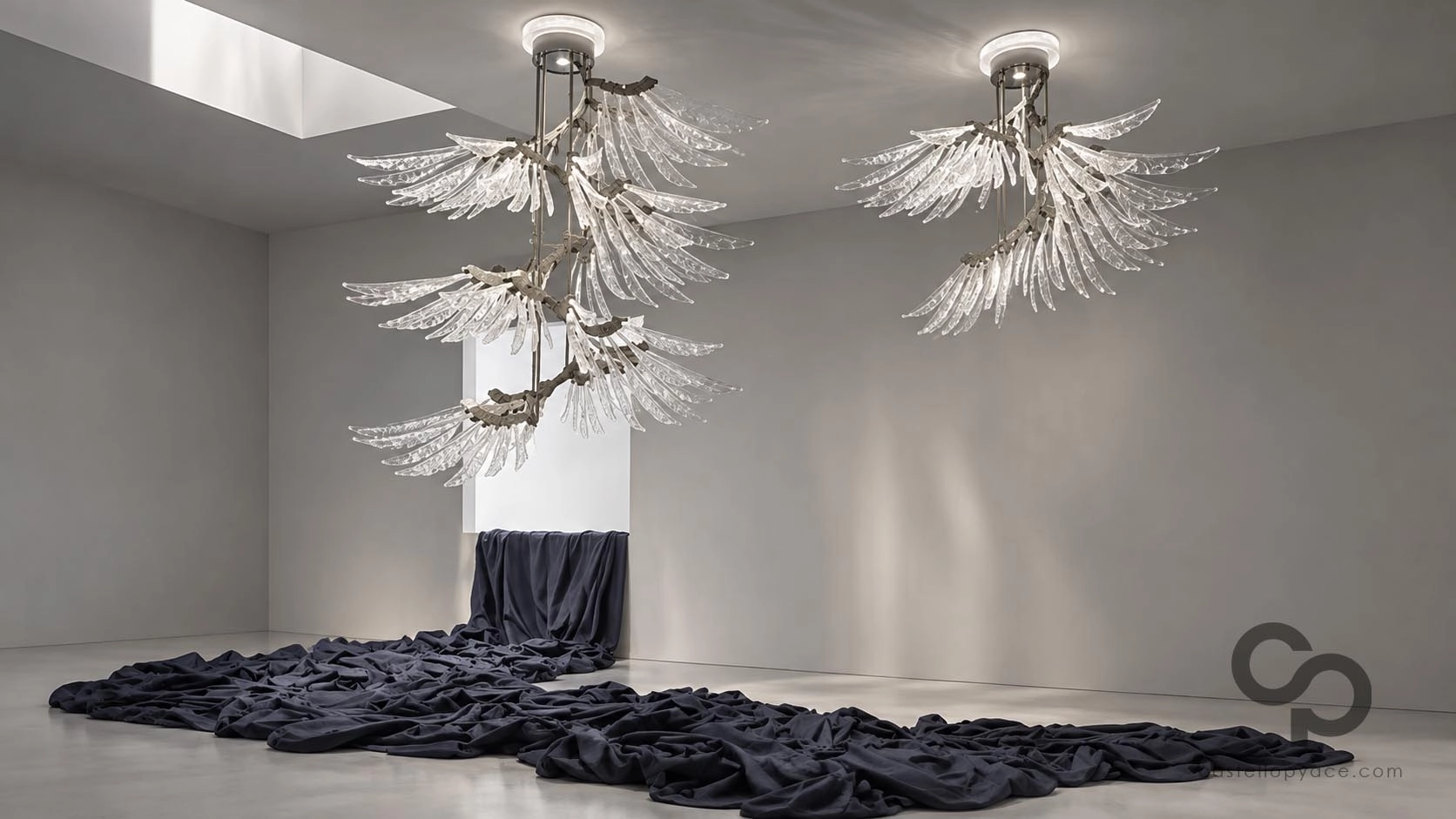
Crystal vs Murano Glass Chandelier at a Glance
The table below puts the two side by side. Treat it as a general guide, because individual makers often borrow from both traditions.
|
Feature |
Crystal chandelier |
Murano glass chandelier |
|---|---|---|
|
Material |
Glass with added metal oxides (lead or lead-free substitutes) |
Lead-free art glass, clear or colored |
|
How it is made |
Cut and polished into facets, then assembled from many components |
Blown or formed while molten, often one element at a time, then assembled |
|
Light behavior |
Sharp sparkle and prismatic flashes |
Soft glow, depth and rich color |
|
Color range |
Mostly clear, with occasional tinted accents |
Wide, from clear to deep saturated shades, including gold leaf and layered effects |
|
Weight |
Heavy, especially with many drops |
Varies; hollow blown elements can be lighter, but large compositions still need strong support |
|
Maintenance |
Many small surfaces to dust |
Fewer parts, but more delicate shapes |
|
Price tier |
Wide range, from machine-cut to hand-cut luxury |
Wide range; authentic handmade work from a known maker sits at the upper end |
|
Best for |
Formal rooms, grand halls, high-brilliance designs |
Sculptural focal points, color-led or Italian-style interiors |
Which Sparkles More, and Which Looks Better?
Switch on a crystal chandelier in a dim room and the walls begin to fill with moving points of light. That is light refraction at work. Each facet bends and splits the beam, and the higher the glass’s refractive index, the stronger the flash. Lead crystal and well-made lead-free crystal both do this well, so for pure sparkle, crystal wins.
Murano glass answers a different question. Light travels through it and settles inside, so the piece seems to glow rather than glitter. Color depth, air bubbles, gold leaf and the curves of a blown form all come forward when the lamp sits within or behind the glass. A clear Murano piece will not throw the same confetti of light as cut crystal, but it shows off its shape in a way cut crystal cannot.
So is Murano glass better than crystal? Neither is better in general. Crystal suits rooms that want brilliance, and Murano suits rooms that want a sculptural centerpiece.
The light source matters too. Small, bright, exposed bulbs bring out cut facets, while a diffused or hidden source flatters blown glass.
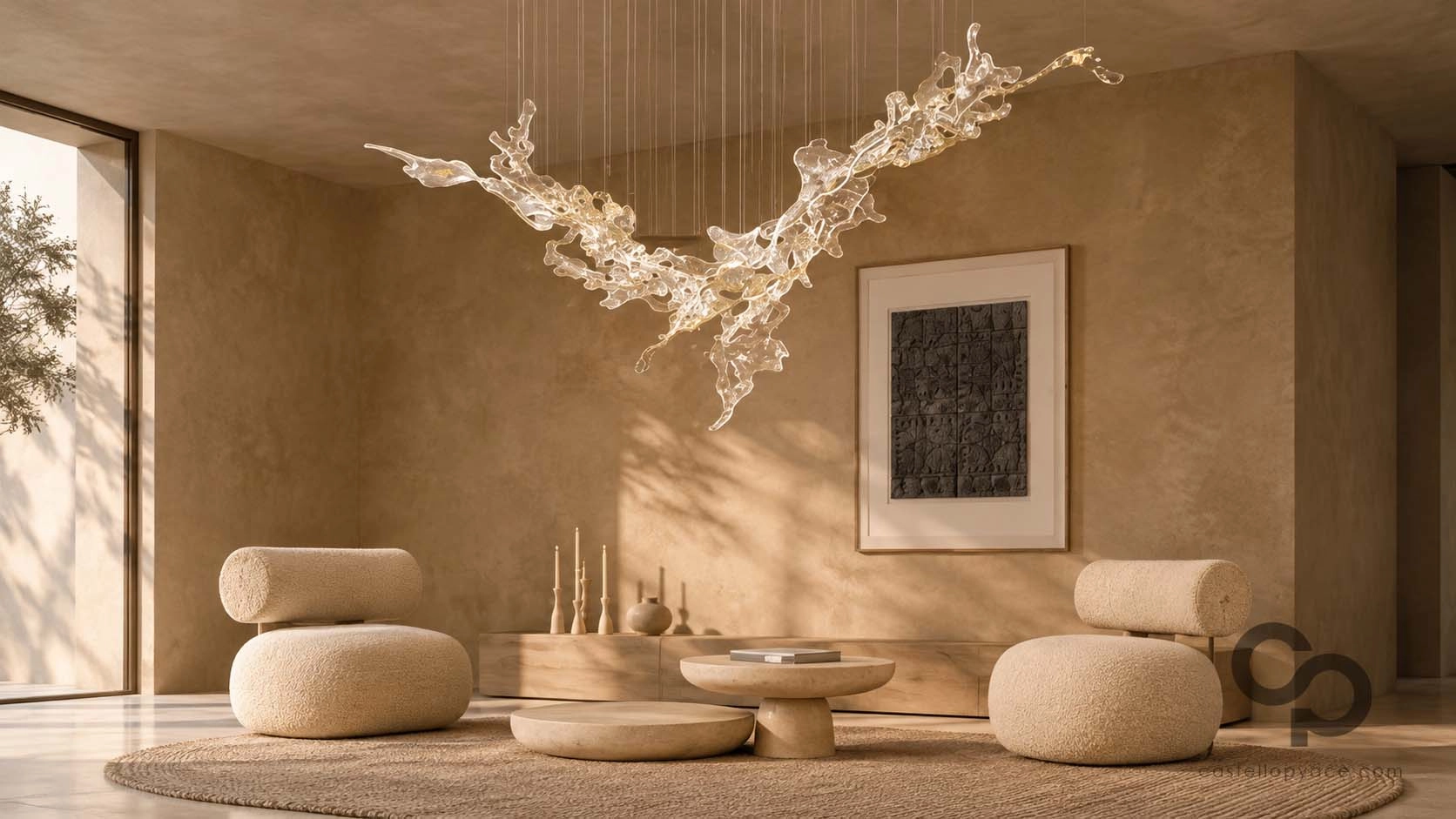
How Baccarat, Lasvit, Barovier&Toso and Italamp Show the Difference
Baccarat is the easiest place to start. The French house, founded in 1764 in Lorraine, is known for crystal, so a Baccarat chandelier is the classic reference for a lead crystal chandelier at its most refined. If you were wondering whether Baccarat is crystal or glass, it is crystal.
On the Murano side, Barovier&Toso is among the oldest names in Venetian glass. A Barovier&Toso chandelier is a good benchmark for handblown work and for the Murano tradition at its most established.
Lasvit is useful because it sits between the two camps. The brand was founded in the Czech Republic and draws on Bohemian glassmaking, yet its chandeliers and installations are contemporary and made with leading designers. A Lasvit chandelier shows how modern design is blurring the old line between blown and cut glass.
Italamp stands for Italian luxury craftsmanship more broadly. Its collections combine glass, crystal and metal, so an Italamp chandelier is best judged model by model rather than filed under one material. The same applies to Terzani, whose handcrafted metalwork sometimes pairs with glass. A Terzani chandelier is a different kind of statement, closer to metal sculpture than to either material in this comparison.
With any of these luxury lighting brands, ask for the material specification of the exact model. Collections within a single brand can differ.
How to Tell Authentic Murano Glass from a Lookalike
“Murano” is used far more loosely in retail than its real meaning allows. Authentic Murano glass is glass made on Murano by Murano craftsmen. A very low price, a vague “Venetian style” listing and a missing maker’s name are the first red flags.
Start with documentation. A reputable seller can name the maker, state the origin and provide Murano glass certification where it applies. The Vetro Artistico® Murano trademark, linked to a regional consortium in Veneto, is one reference point, and a good seller can explain how it applies to your specific piece.
Then look at the object. Handmade elements usually show small natural variations from one to the next. Unusually light weight, plastic-like surfaces and perfect uniformity across a large chandelier are reasons to ask more questions. No single visual sign proves authenticity on its own, which is why the paperwork matters more than the look.
For a high-value project, ask for the maker’s details and written origin information before paying a deposit. Buying through a specialist with direct links to the makers keeps that paper trail short.
Matching the Chandelier to the Room, the Ceiling and the Budget
A living room usually rewards the piece with more personality. A Murano chandelier in a shade that echoes the art or upholstery becomes the anchor of the space, while crystal fits a formal, symmetrical scheme.
Hotel lobbies and grand halls often favor crystal for a practical reason: sparkle reads from far away, across large volumes and under mixed lighting. Murano can still win there when the goal is a signature artwork guests remember.
Staircases are seen from above, below and the side. A long cascade of crystal catches light on every landing, while a blown-glass composition gives a strong silhouette.
For a high-ceiling chandelier, scale matters more than material. A common rule of thumb is roughly 2.5 to 3 inches of fixture height for every foot of ceiling height, although room width and sight lines also count. Tall spaces often call for a long vertical composition or a wide cluster rather than a single compact fixture.
Style follows a similar logic. Classic interiors lean toward crystal and Bohemian designs, modern spaces suit either material when the lines are clean, and artistic interiors suit Murano. As for the worry that crystal chandeliers are outdated, the material is rarely the problem. Heavy, tiered designs can feel dated, while contemporary crystal pieces look nothing like them.
Budget is best handled by choosing a range by maker and size first, then comparing options inside it. Both materials stretch from accessible to extraordinary.
How to Specify a Chandelier for a Luxury Project
Architects and designers can use this checklist before a statement chandelier is locked into a design.
- Ceiling height and clearance. Confirm the total drop and the lowest point. A common guideline places the bottom of a chandelier about 30 to 36 inches (75 to 90 cm) above a dining table, and at least about 7 feet (2.1 m) above floors where people walk beneath it.
- Weight and structural load. Ask for the total weight in writing, then have the structure checked. Heavy chandeliers may need reinforced fixings or dedicated support, and that is a decision for the structural engineer.
- Installation. Large fixtures often arrive in sections and are assembled on site. Plan access, lifting equipment and ceiling works early.
- Lead time. Handmade and bespoke pieces can take months. Confirm the schedule with the maker before fixing the construction program.
- Customization. A custom chandelier can change in size, finish, color and glass details. Request drawings and samples for approval.
- Light source and controls. Check lamp type, dimming compatibility and electrical certification for your region.
Lead Crystal Safety and Everyday Care
For a hanging fixture, lead crystal is generally not a household concern. The lead is bound into the glass, and nobody eats or drinks from a chandelier. The caution around lead crystal mostly applies to storing food and drink in it. Anyone who still prefers to avoid lead can choose lead-free crystal or Murano glass.
Cleaning either type follows the same principle: less is more. Switch off the power and let the bulbs cool. Wear clean soft gloves and wipe each piece with a microfiber cloth instead of spraying liquid over the fixture, since moisture near wiring is a risk.
Crystal with hundreds of small drops takes patience, and large installations are best cleaned by professionals. Murano pieces have fewer parts but more delicate shapes, so support each element as you wipe and never pull on the arms. A periodic check of fixings and wiring is worth the few minutes it takes.
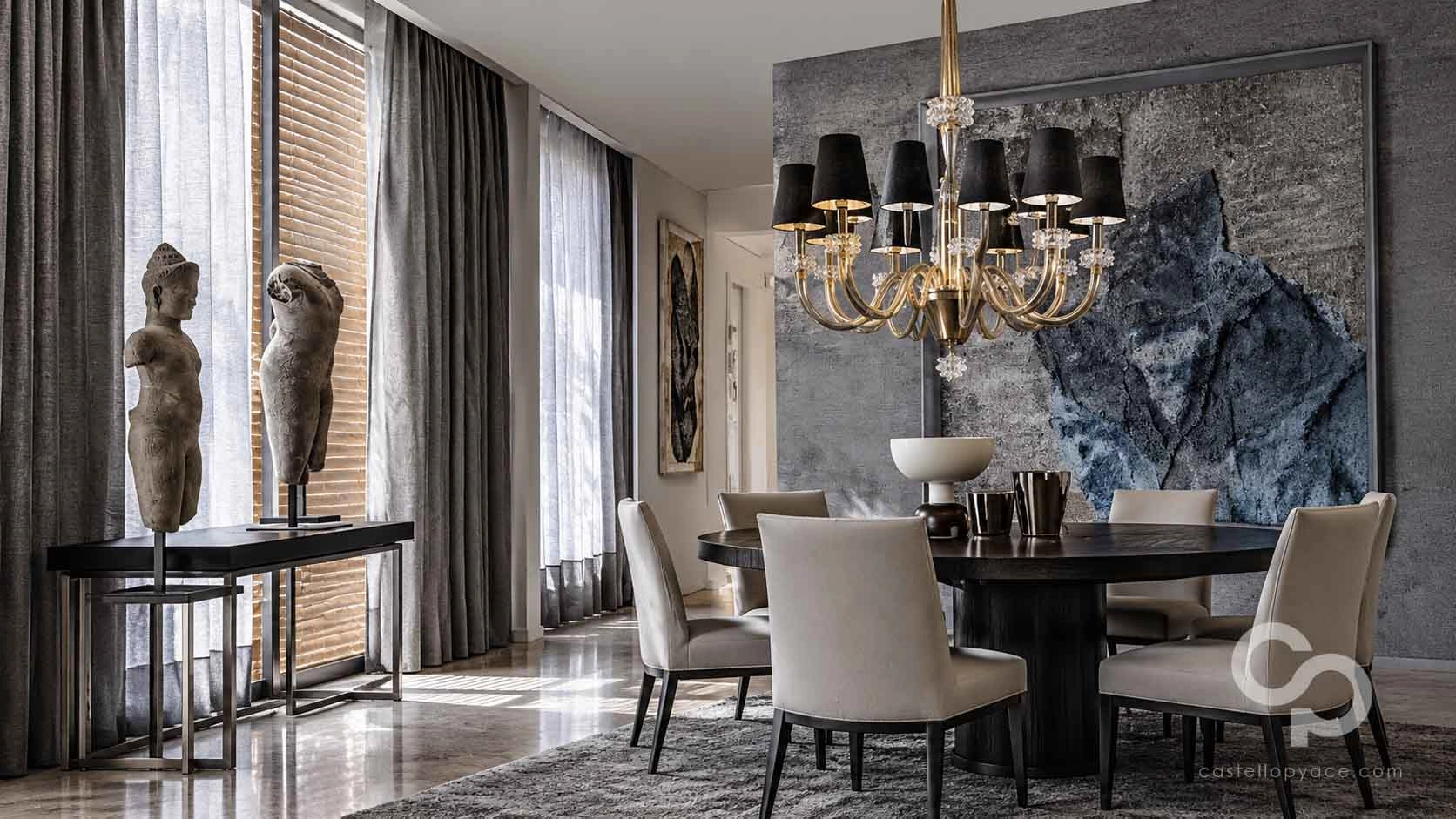
Why Murano Chandeliers Cost So Much, and Whether They Are Worth It
Price follows labor. A skilled glassmaker trains for years, each blown element is shaped one at a time, some pieces are lost during making or assembly, and production runs are small. Add the finishing and assembly of a large fixture, plus careful packing and transport, and the cost starts to make sense. Hand-cut crystal follows much the same logic.
Whether it is worth it depends on how you will live with it. A statement chandelier is replaced far less often than most furnishings. A well-made one can last decades and can be repaired, and documented origin supports its long-term value. No one can promise resale gains, though, so it is wiser to buy for the room than for the return.
Making the Final Call
If the room needs to sparkle, lean toward crystal. If it needs personality, lean toward Murano. That is the heart of the crystal vs murano glass chandelier decision, and the right answer shifts with ceiling height, lighting, style and the paperwork behind the piece.
Whichever you choose, verify authenticity, check weight and fixings early, and judge the specific model rather than the brand name alone.
Castello Pyace brings nearly twenty years of experience in luxury building and works with at least ten partner brands, so we can compare options neutrally and match them to your project. Consult with our luxury lighting specialists or request a project consultation to talk through your space.