Expensive cabinets, polished surfaces, and oversized appliances are not enough to make a kitchen luxurious anymore. In 2026, the most interesting kitchens are designed as part of the home's architecture, with natural materials, thoughtful storage, and advanced technology in a space that feels comfortable to use every day. This shift is particularly relevant to luxury villas and penthouses in Dubai, where kitchens often connect with dining areas, living spaces, and outdoor terraces.
The latest luxury kitchen design trends point towards warmer interiors, expressive stone, sculptural islands, and carefully integrated appliances. European kitchen brands are also shaping this direction, offering design systems that bring together craftsmanship, functionality, and individual style.
1. Warm Minimalism Is Replacing Cold, High-Gloss Kitchens
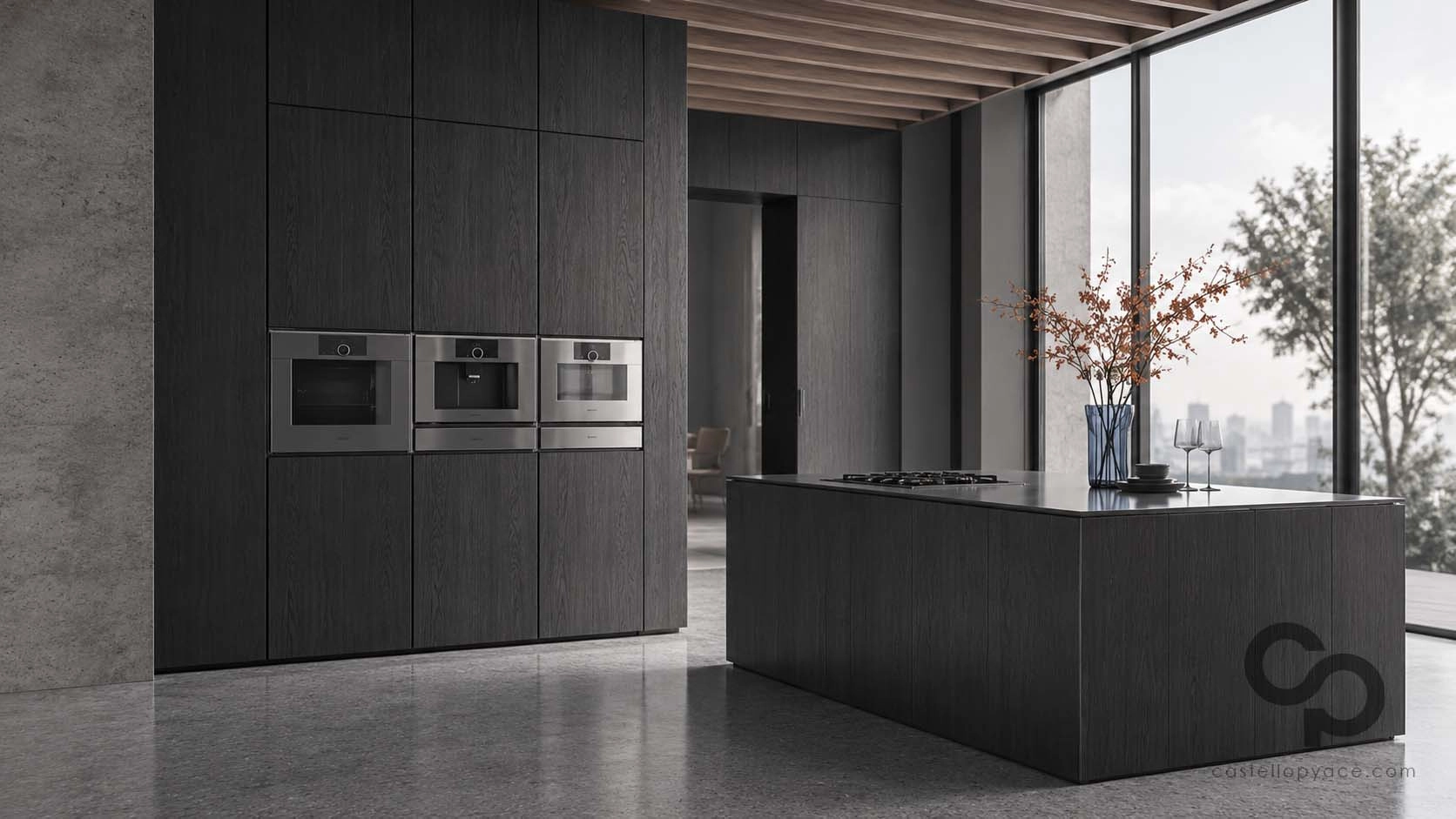
Minimalist kitchens remain popular, but their appearance is becoming softer and more welcoming. Instead of relying entirely on glossy white cabinets, sharp contrasts, and polished surfaces, designers are introducing warm neutrals, natural wood, subtle textures, and understated details.
This approach is often described as warm minimalism or quiet luxury. The idea is to create a sophisticated kitchen without making the space feel formal or visually overwhelming.
Popular colour choices include:
- Warm white, ivory, and cream.
- Sand, beige, taupe, and mushroom.
- Natural oak and walnut finishes.
- Muted olive and sage green.
- Deep brown and charcoal accents.
These tones suit Dubai's spacious residential interiors, where natural light brings out the character of different materials. A kitchen with walnut cabinetry, a light stone island, and brushed metal details can feel luxurious without requiring decorative elements everywhere.
NKBA's 2026 kitchen trend research points the same way: natural materials, earthy colours, and designs that balance contemporary functionality with timeless appeal are gaining importance.
Cabinet finishes follow the same logic. Matte lacquer, textured wood veneer, and understated metal details add visual depth without too much reflection.
Design consideration: A warm minimalist kitchen needs variation in texture. Combining smooth cabinet fronts with a natural stone countertop or finely detailed wood veneer prevents the interior from looking flat.
2. Natural Stone, Wood, and Metal Create More Expressive Interiors
Material choice now carries much of the weight in luxury kitchen design. Rather than using a single finish throughout the room, designers are combining materials with different colours, textures, and visual characteristics.
Natural stone remains a key choice for kitchen islands, countertops, backsplashes, and feature surfaces. Marble, quartzite, and granite each offer distinctive appearances, while engineered and technical surfaces provide additional options for projects with specific maintenance requirements.
Some combinations that stand out in 2026 include:
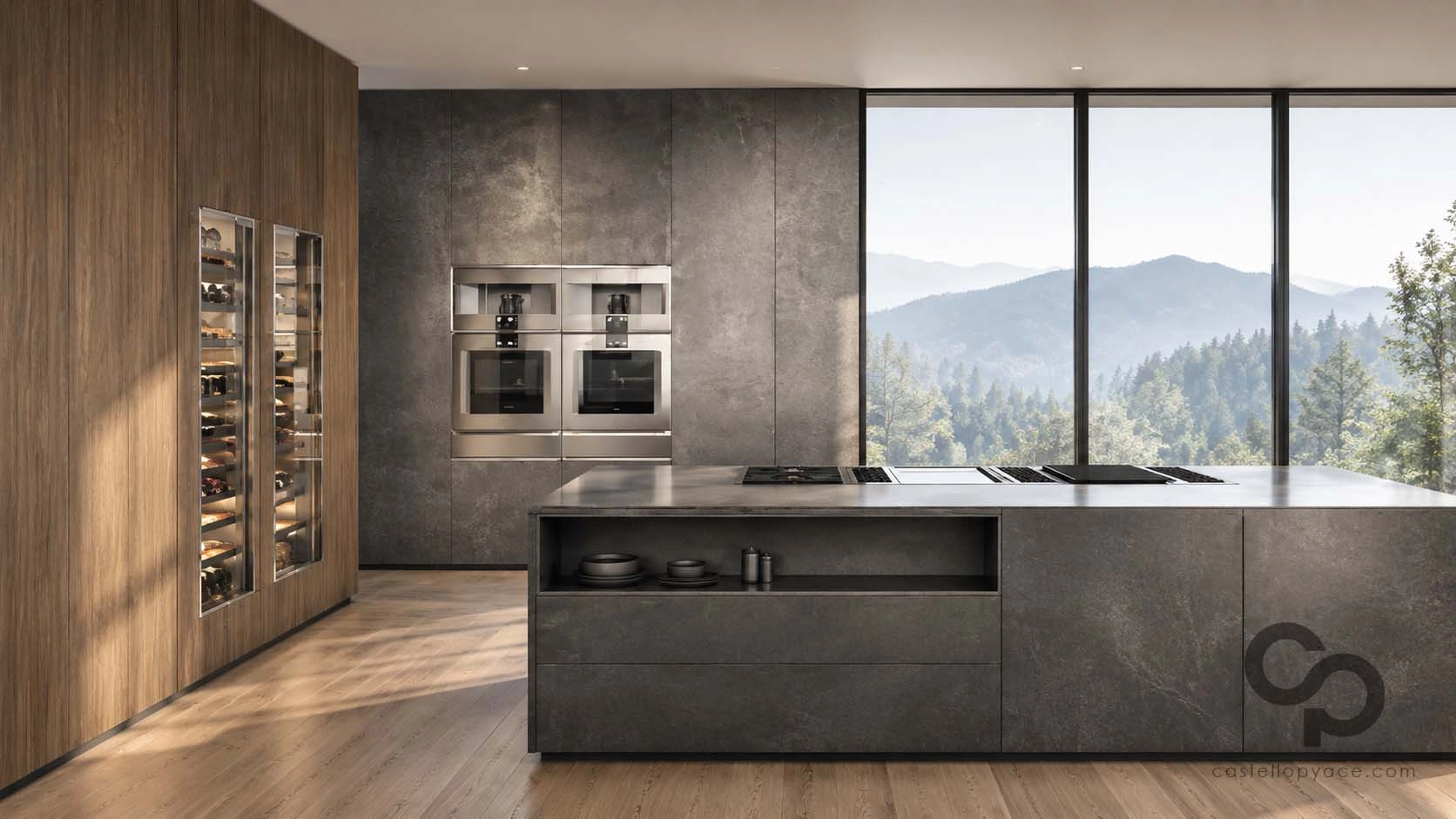
- Calacatta marble with warm walnut cabinetry.
- Travertine-inspired surfaces with brushed bronze details.
- Dark natural stone with light oak or smoked wood.
- Stainless steel elements combined with textured stone.
- Light quartzite countertops paired with matte cabinetry.
The latest kitchen presentations at Milan Design Week 2026 showed how materials can shape the form of a kitchen itself. Marble, titanium, wood, and steel appeared as elements that define islands, worktops, and architectural volumes, not just as finishes.
For projects in Dubai, material selection should consider more than appearance. A marble countertop may offer a distinctive natural pattern, but its maintenance needs are worth understanding before it goes into a heavily used cooking area. Some natural stones require regular sealing and careful cleaning.
In practice, expressive natural stone works best where its visual impact matters most, with suitable technical surfaces in the other work zones.
Italian manufacturers such as Ernestomeda offer a broad selection of materials, including stainless steel, marble, granite, stoneware, glass, and wood finishes. This variety allows designers to develop kitchens with different material combinations while maintaining a coherent design language.
3. Sculptural Kitchen Islands Become the Centre of the Space
The kitchen island is evolving beyond a practical countertop or additional preparation area. In luxury residential interiors, it is increasingly treated as a central architectural feature that connects cooking, dining, and social activities.
Curved islands are one of the notable design directions for 2026. Their softer outlines break away from conventional rectangular layouts, especially when the island sits within an open-plan living space.
Some popular approaches include full-height stone islands, rounded corners, waterfall edges, integrated seating, and combinations of timber with metal detailing.
A waterfall kitchen island, for example, extends the countertop material down one or both sides, creating a continuous visual surface. This works best when the stone has distinctive natural veining.
Newer kitchen concepts also explore the island as a sculptural object. Arclinea's Kora kitchen, presented in 2026, combines marble, wood, PVD finishes, and polished steel. Its curved design brings together different surfaces into a more continuous architectural form.
How should a luxury kitchen island be designed?
The room's actual layout should set the island's dimensions, not the wish for a larger feature. Designers need to consider circulation space, appliance placement, seating, storage, and the relationship between preparation and cooking areas.
For a large Dubai villa, a double kitchen island may also be appropriate. One island can support food preparation, while another provides seating, serving space, or an informal gathering area.
4. Concealed Storage and Integrated Appliances Create Seamless Designs
A visually calm kitchen often depends on what cannot be seen. Hidden storage, integrated appliances, and carefully planned cabinet systems keep the room looking consistent while it stays fully functional every day.
This matters most in open-plan homes, where the kitchen remains visible from dining and living areas.
Handleless kitchen cabinets, concealed pantry doors, integrated refrigerators, and appliance garages help reduce visual interruptions. Floor-to-ceiling cabinetry can also make better use of vertical space while providing room for storage.
Another growing design approach is the inclusion of a separate preparation area or butler's pantry. This secondary space can accommodate smaller appliances, food preparation, additional refrigeration, and storage without occupying the main kitchen island.
For example, a luxury villa might feature a presentation kitchen facing the dining area, with a secondary preparation space behind a concealed door. The main kitchen stays visually refined while more intensive cooking tasks take place elsewhere.
Brands such as Boffi and Poliform offer kitchen systems that support different configurations, materials, and relationships between kitchen and living spaces.
Boffi emphasizes customization across its kitchen components, while Poliform offers contemporary kitchen collections with varied compositional options and finishes.
5. Smart Kitchen Technology Focuses on Convenience Rather Than Complexity
Advanced appliances are an important part of contemporary luxury kitchens, but technology does not need to dominate the visual design.
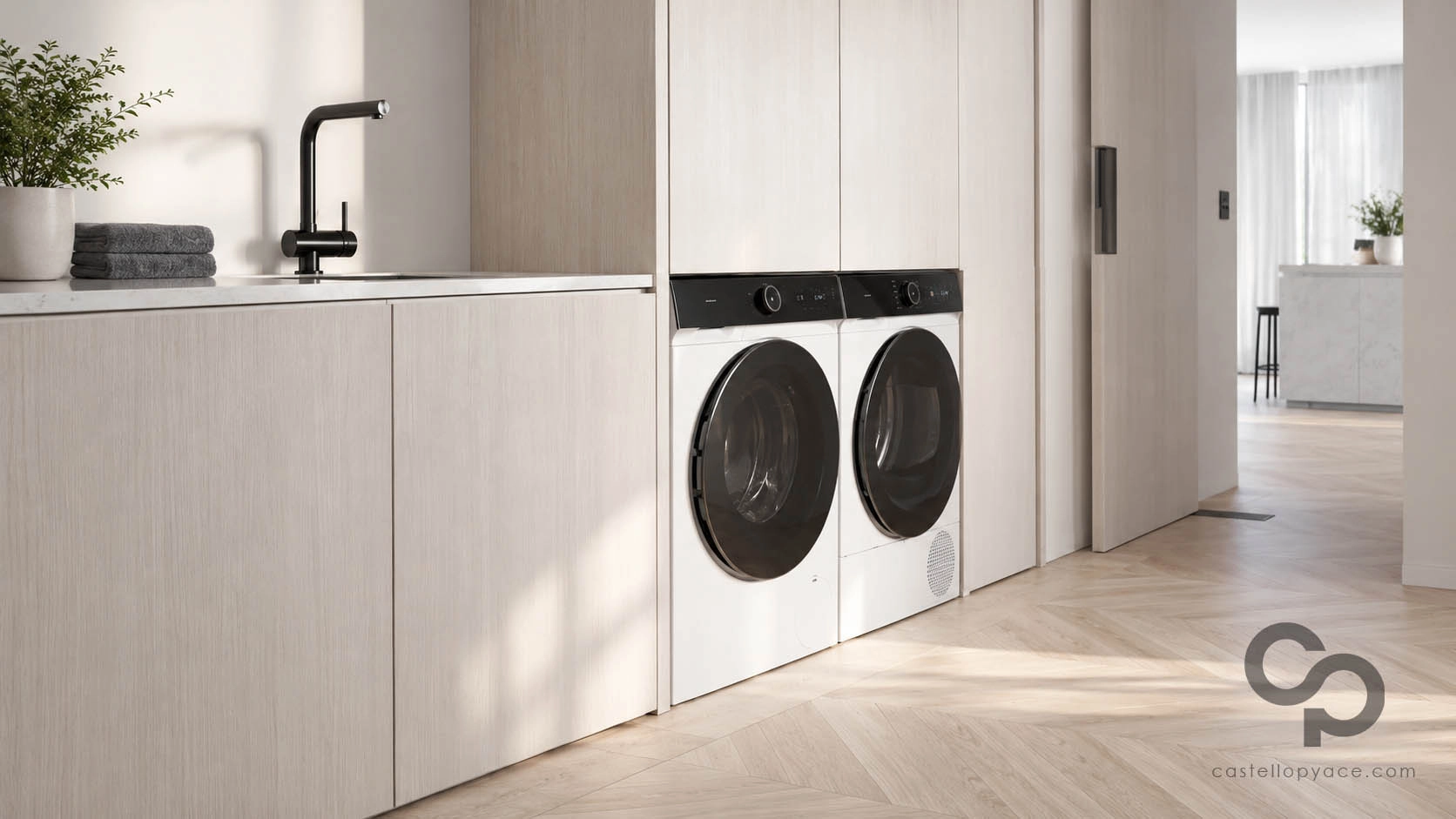
In 2026, a good smart kitchen is one where technology supports daily activities without adding complexity. Integrated controls, connected appliances, intelligent cooking functions, and improved ventilation can make the kitchen easier to use.
The features that matter most include app-connected appliances, programmable cooking settings, precise temperature control, integrated induction cooktops, and advanced refrigeration systems.
Smart functionality should still match what the household actually needs. A connected refrigerator may be useful for someone who manages household shopping through digital tools, while a professional-style steam oven may offer more value to someone who cooks frequently.
Three international appliance brands are worth a closer look.
Miele
Miele offers a broad range of built-in kitchen appliances and connected-home functionality through Miele@home. Selected appliances can be connected and monitored from a smartphone or tablet, which makes everyday kitchen management easier.
Gaggenau
Gaggenau focuses on premium kitchen appliances with design references to professional cooking environments. Its product range includes ovens, combi-steam ovens, and other cooking equipment for homeowners who value precise cooking functions and advanced performance.
Bertazzoni
Bertazzoni offers coordinated kitchen appliance collections covering cooking, refrigeration, ventilation, and dishwashing. Its collections include Professional, Modern, Master, and Heritage series, providing different visual approaches to kitchen appliance specification.
For a well-designed kitchen, the priority is to coordinate appliance dimensions, ventilation requirements, electrical connections, and cabinetry before installation begins.
6. European Kitchen Design Remains Important for Luxury Homes
European kitchen design holds a strong place in the luxury interiors market because it combines architectural thinking with detailed product development and material selection.
Italian kitchen manufacturers, in particular, offer a wide range of approaches, from minimalist architectural systems to highly customized spaces with expressive finishes.
A few brands from the Italian design sector show how varied the options are.
Ernestomeda's contemporary kitchen collections put a strong focus on materials, finishes, and functional details.
Arclinea suits professional-inspired kitchen design, with collections that explore the relationship between cooking functionality and architectural form.
Boffi's kitchen systems can be customized, whether for an independent kitchen or for a space connected to the living area.
Poliform's contemporary kitchen collections come with different compositions and finishes, and with possibilities for integrating furniture throughout the home.
Molteni&C brings kitchen design into a wider interior concept, connecting its kitchen collection with furniture and other residential spaces.
Aran Cucine combines Italian design, craftsmanship, and customized solutions across its kitchen and interior collections.
Valcucine fits projects that prioritize material innovation, product longevity, and sustainability.
Other brands also offer interesting approaches to bespoke interiors. Prophilo develops customized interiors based on individual requirements, while Bizzotto Italia offers contemporary and classic kitchen collections with personalized design options.
These brands should not be treated as interchangeable alternatives. Their design philosophies, product ranges, and areas of specialization differ. The right selection depends on the architectural concept, functional requirements, material preferences, and overall direction of the project.

7. Indoor-Outdoor Kitchen Design Becomes More Relevant in Dubai
Many luxury villas in Dubai have terraces, landscaped gardens, swimming pools, or outdoor entertaining areas. That makes it possible to extend the kitchen beyond its traditional interior boundaries.
Indoor-outdoor kitchen design connects food preparation and entertaining areas through large sliding doors, matching materials, consistent flooring, and coordinated furniture.
An outdoor kitchen may include a built-in grill, preparation counter, sink, storage cabinets, and a dedicated dining area. In larger properties, it can become a separate cooking and entertaining destination.
However, designing for Dubai means taking the local environment seriously. Outdoor kitchens need shading, weather-resistant equipment, materials that suit the conditions, and protection from direct sunlight and exposure.
The relationship between indoor cooling and outdoor areas should also be considered during the architectural planning stage.
For example, a villa with a large glass opening could connect the indoor kitchen to a shaded terrace. The interior might use natural stone and oak cabinetry, while the outdoor area uses suitable stone surfaces and appropriately specified metal components.
The point is not necessarily to duplicate the indoor kitchen outside. Both areas should share a coherent design language while responding to their different functional and environmental requirements.
8. Sustainable Design and Long-Lasting Materials Gain Importance
Sustainability now plays a bigger role in how luxury kitchens are specified. Instead of focusing only on environmentally friendly finishes, designers are considering the entire life of a kitchen, including material consumption, repairability, durability, and the possibility of recycling components.
A kitchen designed to last can reduce the need for frequent replacement and unnecessary renovation.
In practice, this can mean high-quality materials, replaceable components, energy-conscious appliances, and no design decisions that are likely to become outdated quickly.
Valcucine provides a relevant example of this approach. Its sustainability principles include reducing material consumption, designing components for disassembly, and using recyclable materials such as aluminium and glass. The company also highlights the importance of product longevity and responsible material selection.
Sustainable luxury does not have to cost visual quality; it comes down to better decisions about the materials and systems that form the kitchen.
For a Dubai villa, this could mean selecting durable countertop materials, specifying efficient appliances, and choosing cabinetry that can be maintained or updated without replacing the entire installation.
How to Choose the Right Luxury Kitchen Design for a Dubai Home
A successful kitchen project begins with the way people intend to use the space. Following every new trend is not necessarily the best route to a sophisticated result.
Before choosing a kitchen brand or finalizing materials, run through the points below.
| Design Consideration | What to Evaluate |
|---|---|
| Kitchen Layout | Room dimensions, circulation, island placement, and workflow |
| Cabinetry | Material quality, storage capacity, finishes, and customization |
| Countertops | Appearance, maintenance, heat resistance, and intended use |
| Appliances | Cooking habits, energy performance, dimensions, and available functions |
| Lighting | Natural light, task lighting, and ambient illumination |
| Climate Response | Indoor cooling, ventilation, sun exposure, and outdoor material suitability |
| Design Consistency | Relationship between the kitchen, dining area, and living space |
Take a villa where the kitchen opens directly onto a formal dining area. In this situation, concealed appliances, integrated cabinetry, and a sculptural island may be more suitable than a highly commercial-looking cooking setup.
For a homeowner who cooks regularly, however, professional cooking equipment, generous preparation surfaces, and dedicated storage may deserve greater attention.
A good kitchen balances the architecture of the property with the homeowner's lifestyle.
Frequently Asked Questions
What are the latest luxury kitchen design trends in Dubai for 2026?
The main design directions include warm minimalism, natural stone surfaces, textured wood cabinetry, sculptural kitchen islands, integrated appliances, smart technology, and indoor-outdoor layouts. Customization and long-lasting materials are gaining weight too.
What is the most popular kitchen design style for luxury homes?
Contemporary European design remains a strong choice for luxury homes. Warm minimalist kitchens appeal because they combine clean architectural lines with natural materials, understated colours, and functional storage.
Which materials are best for luxury kitchen countertops?
Natural marble, quartzite, granite, porcelain, and engineered surfaces are among the available choices. The right pick follows from appearance, maintenance requirements, resistance to everyday use, and the intended application.
What are the best Italian luxury kitchen brands?
Notable Italian brands include Ernestomeda, Arclinea, Boffi, Poliform, Valcucine, Molteni&C, and Aran Cucine. Bizzotto Italia and Prophilo also offer relevant options for customized interiors and premium residential projects.
What is the difference between Miele and Gaggenau kitchen appliances?
Both brands offer premium German kitchen appliances, but their collections and design approaches differ. Miele offers a broad range of connected household appliances, while Gaggenau emphasizes high-end cooking equipment with professional-kitchen design influences. In the end, the choice follows the appliances needed, the functions that matter, and how the household likes to cook.
Are built-in kitchen appliances worth the investment?
Built-in appliances can create a more integrated appearance and help maintain consistent cabinetry. They help most in open-plan kitchens where visual continuity matters. Whether they are worth it varies with the kitchen layout, installation requirements, servicing access, and the household's needs.
How do you design a luxury kitchen for a villa in Dubai?
Start with the villa's architectural layout, natural lighting, ventilation, and cooling requirements. Then select suitable materials, integrate storage and appliances, and consider whether an indoor-outdoor connection would improve the space. The kitchen should reflect the property's overall design rather than function as an isolated room.
How can sustainability be incorporated into luxury kitchen design?
Choose long-lasting materials, recyclable components, efficient appliances, and cabinetry systems that can be repaired or updated. Selecting timeless finishes and avoiding unnecessary replacements can also improve the long-term sustainability of the project.
Conclusion
The luxury kitchen design trends shaping Dubai in 2026 point towards warmer interiors, expressive natural materials, sculptural islands, integrated technology, and customized European design solutions.
For homeowners, architects, and interior designers, the question is less which trend looks attractive and more how each material, appliance, and design system contributes to the overall architecture and everyday function of the home.
Working with established international kitchen and appliance brands can help bring these elements together, provided that their products are selected according to the project's actual requirements. A well-planned luxury kitchen should look distinctive today while remaining practical and relevant for years to come.
Discover Luxury Kitchen Brands for Your Next Project
The right kitchen design begins with choosing the right partners. Explore the international kitchen brands featured by Castello Pyace and discover premium design collections that bring together European craftsmanship, refined aesthetics, and modern functionality.